A multicultural wedding reception works best when two families, two traditions, and every vendor share one cue sheet. Blending two cultures is exciting, and it is also a real logistical challenge. It doubles the moving parts. Two families may each bring formalities, performances, and expectations to the same few hours. Without coordination, those pieces compete. With coordination, they flow together into one evening that honors both sides.
This guide covers the coordination side, not the aesthetics. It does not tell you which traditions to include or which attire to wear. Those choices are yours. Instead, it explains how the reception logistics actually work when you are combining two cultures in Seattle.
Why a multicultural wedding reception needs real coordination
Here is the misconception worth correcting directly. Many couples assume the hard part is décor, attire, and food. In reality, the hard part is the logistics.
A multicultural wedding reception often carries two sets of formalities into the same window of time. Two grand entrances, two traditions, and two families’ expectations all want a place. Something has to give, or the night runs long. So the real work is coordination, not decoration. Roles and a shared cue sheet matter more than any single design choice. Think of a concrete example. One family plans a tea ceremony. The other plans a formal toast sequence. Both are meaningful, and both need time, space, and a clear cue. A multicultural wedding reception has to hold both without letting either feel squeezed. That balance comes from planning, not luck.
Our DJ support for Chinese and multicultural weddings page shows how this fits the whole service.
Blending two sets of traditions into one multicultural reception
Start by listing every tradition each family wants. Write them all down first. Then decide which ones share the evening and how they connect.
Some traditions pair naturally. A tea ceremony and a first dance can sit in the same stretch of the night. Others need separation, so they each get their own moment. So map the traditions before you map the timeline. That order prevents surprises later. Talk with both families early. Ask what each tradition means and how long it runs. Some take five minutes, and some take thirty. Knowing the real length of each one keeps the evening honest. Write the final list where everyone can see it. Both families should recognize their traditions on the plan. That shared visibility builds trust before the day even arrives.
Online, a multicultural reception looks like a seamless highlight reel of two cultures. In the room, two traditions compete for the same hours. The couples who plan for that overlap early are the ones who avoid a rushed night.
Assigning roles for your multicultural wedding reception
Every reception needs clear roles. A multicultural one needs them even more. Decide early who owns the timeline, who cues each tradition, and who approves changes on the day.
Usually the DJ or a planner holds the master timeline. The MC carries the room and the announcements. A family member may guide a specific cultural moment. When each role is named in advance, no one improvises alone. So write the roles into the plan, not into your memory.
If guests need announcements in more than one language, assign the bilingual MC or translator separately and give that person a written cue sheet. The DJ may manage the audio and musical transitions, but bilingual MC or translation services should be confirmed as their own responsibility rather than assumed.
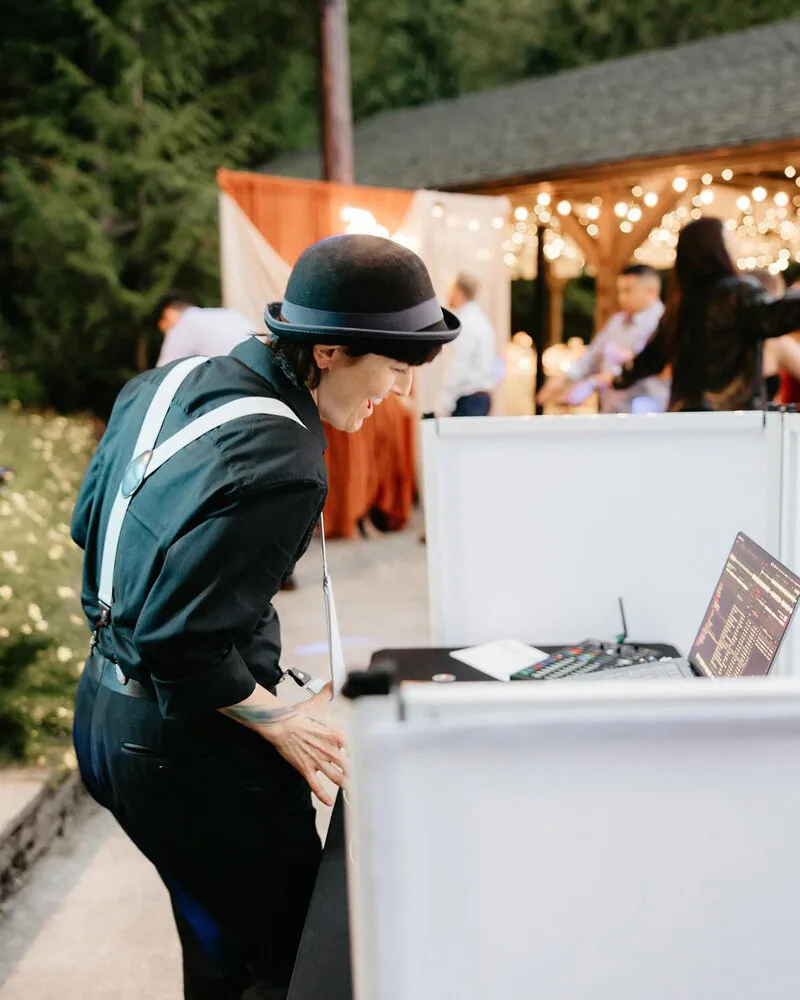
After coordinating hundreds of Pacific Northwest weddings, DJ Kelli assigns these roles from the start. One person owns the flow. Everyone else knows their cue. That single habit keeps a two-culture evening calm. Roles are the foundation of any multicultural wedding reception. Once they are set, decisions get faster on the day. When a question comes up, everyone already knows who answers it.
Building one shared multicultural reception cue sheet
A cue sheet is the backbone of the night. It lists every announcement, every tradition, and every handoff in order. The DJ, the MC, the planner, and the caterer all work from the same page.
Keep the cue sheet specific. Note who speaks, what happens next, and what audio each moment needs. A tradition that surprises the DJ mid-reception risks an awkward pause. A cue sheet removes that risk. If your reception is also bilingual, our guide to bilingual reception planning covers the language handoffs in depth. A multicultural wedding reception lives or dies by this document. Build it once, review it with every vendor, and update it as plans change.
Coordinating vendors across the multicultural reception
A multicultural reception often involves more vendors than usual. Two caterers, two performers, or two musical acts may share the night. So vendor coordination becomes central.
Align every vendor around the same timeline and cue sheet. Confirm who sets up when, who needs power, and who cues whom. Then share the final plan a few days ahead, not the morning of. Vendors need time to read it and flag conflicts. When everyone works from one document, transitions stay smooth and nobody is guessing. So a multicultural wedding reception depends on tight vendor coordination. The more cultures you blend, the more handoffs you create. Each handoff is a chance for a smooth transition or an awkward gap.
Audio and sound for a multicultural wedding reception
Audio logistics deserve their own attention. Two families may bring speeches, live musicians, or performances that each need different sound support. This is about the setup, not the song list.
Ask each performer what they require. A singer may need a backing track. A live musician may need a direct input or a monitor. Plan a brief sound check before guests arrive. For help choosing and organizing the songs themselves, see our Chinese and multicultural wedding music guide. Reliable audio matters because guests notice feedback or uneven volume immediately, especially during vows and toasts. Label each audio need on the cue sheet. Note the microphones, the tracks, and the inputs for every moment. That way, the sound is ready before anyone speaks or performs.
Meal service and timeline pivots at a multicultural reception
Dinner shapes the pace of any reception. A multicultural one may blend menus or run multiple courses, so meal timing needs care. Coordinate closely with the caterer on when each course lands.
Speeches and traditions work best around the food, not against it. So bracket them between courses rather than during a hot plate. For the full sequence of a Chinese-style reception, see our Chinese wedding reception timeline guide. For the standard order that applies to any wedding, our Seattle wedding reception timeline post breaks it down. Coordinate the courses with the traditions too. A performance during meal service can slow the kitchen. So place activities in the gaps between courses when you can.
Preparing your multicultural wedding reception for changes
No timeline survives untouched. Something always shifts. A course runs late, a performer changes a cue, or a family adds a moment on the day.
Local logistics add their own surprises too. A ferry to the San Juan Islands can run late. An outdoor ceremony near Woodinville may need a quick indoor pivot. So build buffer into the plan around the moments most likely to slip. From coordinating events across Seattle and Snohomish, DJ Kelli notices a consistent pattern. The smoothest multicultural receptions have clearly assigned roles and one shared cue sheet. That structure absorbs change without the guests ever noticing. That is the quiet goal of good coordination. Guests should feel a warm, seamless evening. They should never see the planning that made it possible. Name a single decision-maker for the day too. When a change comes up, one person decides quickly. That keeps a small hiccup from becoming a long delay.
Chinese & Multicultural Wedding Planning
Use the planning hub for the full resource library, or continue with the page most relevant to your next decision:
Multicultural wedding reception FAQ
What is the hardest part of a multicultural wedding reception?
Not the décor or attire. The hardest part is coordinating two sets of formalities into one evening. Roles, a cue sheet, and vendor alignment carry the night.
Who should own the timeline at a multicultural reception?
One person, named in advance. Usually the DJ or planner holds the master timeline. The MC carries announcements. So everyone else works from that single plan.
How do we fit two families’ traditions into one reception?
List every tradition first, then map them to the timeline. Some pair naturally, and some need their own moment. Plan the overlap early to avoid a rushed night.
Why does a multicultural wedding reception often run long?
Two cultures bring two sets of formalities into the same hours. Without a shared cue sheet, the pieces compete. So build buffer and assign roles before the day.
A multicultural wedding reception works best when two families, two traditions, and every vendor share one cue sheet. Blending two cultures is exciting, and it is also a real logistical challenge. It doubles the moving parts. Two families may each bring formalities, performances, and expectations to the same few hours. Without coordination, those pieces compete. With coordination, they flow together into one evening that honors both sides.
This guide covers the coordination side, not the aesthetics. It does not tell you which traditions to include or which attire to wear. Those choices are yours. Instead, it explains how the reception logistics actually work when you are combining two cultures in Seattle.
Why a multicultural wedding reception needs real coordination
Here is the misconception worth correcting directly. Many couples assume the hard part is décor, attire, and food. In reality, the hard part is the logistics.
A multicultural wedding reception often carries two sets of formalities into the same window of time. Two grand entrances, two traditions, and two families’ expectations all want a place. Something has to give, or the night runs long. So the real work is coordination, not decoration. Roles and a shared cue sheet matter more than any single design choice. Think of a concrete example. One family plans a tea ceremony. The other plans a formal toast sequence. Both are meaningful, and both need time, space, and a clear cue. A multicultural wedding reception has to hold both without letting either feel squeezed. That balance comes from planning, not luck.
Our DJ support for Chinese and multicultural weddings page shows how this fits the whole service.
Blending two sets of traditions into one multicultural reception
Start by listing every tradition each family wants. Write them all down first. Then decide which ones share the evening and how they connect.
Some traditions pair naturally. A tea ceremony and a first dance can sit in the same stretch of the night. Others need separation, so they each get their own moment. So map the traditions before you map the timeline. That order prevents surprises later. Talk with both families early. Ask what each tradition means and how long it runs. Some take five minutes, and some take thirty. Knowing the real length of each one keeps the evening honest. Write the final list where everyone can see it. Both families should recognize their traditions on the plan. That shared visibility builds trust before the day even arrives.
Online, a multicultural reception looks like a seamless highlight reel of two cultures. In the room, two traditions compete for the same hours. The couples who plan for that overlap early are the ones who avoid a rushed night.
Assigning roles for your multicultural wedding reception
Every reception needs clear roles. A multicultural one needs them even more. Decide early who owns the timeline, who cues each tradition, and who approves changes on the day.
Usually the DJ or a planner holds the master timeline. The MC carries the room and the announcements. A family member may guide a specific cultural moment. When each role is named in advance, no one improvises alone. So write the roles into the plan, not into your memory.
If guests need announcements in more than one language, assign the bilingual MC or translator separately and give that person a written cue sheet. The DJ may manage the audio and musical transitions, but bilingual MC or translation services should be confirmed as their own responsibility rather than assumed.
After coordinating hundreds of Pacific Northwest weddings, DJ Kelli assigns these roles from the start. One person owns the flow. Everyone else knows their cue. That single habit keeps a two-culture evening calm. Roles are the foundation of any multicultural wedding reception. Once they are set, decisions get faster on the day. When a question comes up, everyone already knows who answers it.
Building one shared multicultural reception cue sheet
A cue sheet is the backbone of the night. It lists every announcement, every tradition, and every handoff in order. The DJ, the MC, the planner, and the caterer all work from the same page.
Keep the cue sheet specific. Note who speaks, what happens next, and what audio each moment needs. A tradition that surprises the DJ mid-reception risks an awkward pause. A cue sheet removes that risk. If your reception is also bilingual, our guide to bilingual reception planning covers the language handoffs in depth. A multicultural wedding reception lives or dies by this document. Build it once, review it with every vendor, and update it as plans change.
Coordinating vendors across the multicultural reception
A multicultural reception often involves more vendors than usual. Two caterers, two performers, or two musical acts may share the night. So vendor coordination becomes central.
Align every vendor around the same timeline and cue sheet. Confirm who sets up when, who needs power, and who cues whom. Then share the final plan a few days ahead, not the morning of. Vendors need time to read it and flag conflicts. When everyone works from one document, transitions stay smooth and nobody is guessing. So a multicultural wedding reception depends on tight vendor coordination. The more cultures you blend, the more handoffs you create. Each handoff is a chance for a smooth transition or an awkward gap.
Audio and sound for a multicultural wedding reception
Audio logistics deserve their own attention. Two families may bring speeches, live musicians, or performances that each need different sound support. This is about the setup, not the song list.
Ask each performer what they require. A singer may need a backing track. A live musician may need a direct input or a monitor. Plan a brief sound check before guests arrive. For help choosing and organizing the songs themselves, see our Chinese and multicultural wedding music guide. Reliable audio matters because guests notice feedback or uneven volume immediately, especially during vows and toasts. Label each audio need on the cue sheet. Note the microphones, the tracks, and the inputs for every moment. That way, the sound is ready before anyone speaks or performs.
Meal service and timeline pivots at a multicultural reception
Dinner shapes the pace of any reception. A multicultural one may blend menus or run multiple courses, so meal timing needs care. Coordinate closely with the caterer on when each course lands.
Speeches and traditions work best around the food, not against it. So bracket them between courses rather than during a hot plate. For the full sequence of a Chinese-style reception, see our Chinese wedding reception timeline guide. For the standard order that applies to any wedding, our Seattle wedding reception timeline post breaks it down. Coordinate the courses with the traditions too. A performance during meal service can slow the kitchen. So place activities in the gaps between courses when you can.
Preparing your multicultural wedding reception for changes
No timeline survives untouched. Something always shifts. A course runs late, a performer changes a cue, or a family adds a moment on the day.
Local logistics add their own surprises too. A ferry to the San Juan Islands can run late. An outdoor ceremony near Woodinville may need a quick indoor pivot. So build buffer into the plan around the moments most likely to slip. From coordinating events across Seattle and Snohomish, DJ Kelli notices a consistent pattern. The smoothest multicultural receptions have clearly assigned roles and one shared cue sheet. That structure absorbs change without the guests ever noticing. That is the quiet goal of good coordination. Guests should feel a warm, seamless evening. They should never see the planning that made it possible. Name a single decision-maker for the day too. When a change comes up, one person decides quickly. That keeps a small hiccup from becoming a long delay.
Chinese & Multicultural Wedding Planning
Use the planning hub for the full resource library, or continue with the page most relevant to your next decision:
Multicultural wedding reception FAQ
What is the hardest part of a multicultural wedding reception?
Not the décor or attire. The hardest part is coordinating two sets of formalities into one evening. Roles, a cue sheet, and vendor alignment carry the night.
Who should own the timeline at a multicultural reception?
One person, named in advance. Usually the DJ or planner holds the master timeline. The MC carries announcements. So everyone else works from that single plan.
How do we fit two families’ traditions into one reception?
List every tradition first, then map them to the timeline. Some pair naturally, and some need their own moment. Plan the overlap early to avoid a rushed night.
Why does a multicultural wedding reception often run long?
Two cultures bring two sets of formalities into the same hours. Without a shared cue sheet, the pieces compete. So build buffer and assign roles before the day.