A bilingual Chinese wedding reception works best when both languages share one plan, one timeline, and clear cues. Many couples in Seattle host guests who speak English and guests who speak Mandarin or Cantonese. Both groups deserve to follow every announcement, toast, and transition. That coordination does not happen by accident. Instead, it comes from deciding early who speaks, in which language, and at which moment.
This guide covers the planning side. It does not teach Chinese wedding customs, and it does not claim that Puget Sounds provides a Chinese-language MC. Instead, it explains how the announcement and language logistics actually work in the room. That way, you can build a reception that reads clearly to everyone present.
Why a bilingual Chinese wedding reception needs one plan
A bilingual Chinese wedding reception carries double the spoken content. Every welcome, every introduction, and every toast can run twice. Without structure, that repetition stretches the night and confuses the pacing. With structure, it feels natural and inclusive instead.
So the goal is not to translate everything word for word. The goal is to decide what needs both languages, what needs one, and how each moment flows into the next. A short planning conversation up front prevents long pauses later. It also frees you to enjoy the evening rather than manage it. This planning lowers stress for your families too. When elders know the evening will speak their language, they relax and take part more fully.
For couples building their broader plan, our Chinese wedding planning resources cover the wider checklist. This post stays focused on the language and announcement layer.
Which bilingual reception announcements need translation
Not every line needs two languages. Some moments carry meaning for the whole room. Others are practical and short. Sorting them early keeps the reception moving.
Announcements that benefit from both languages include the grand entrance, the welcome, and key toasts. Any instruction that affects guests directly belongs here too. For example, a dinner or buffet cue matters to everyone, so both language groups should hear it. Meanwhile, quick logistical asides can often stay in one language. Consider the practical cues too. Seating instructions, a restroom location, or a shuttle time can each cause confusion if only half the room hears them. So treat guest-facing logistics as bilingual by default. Purely internal notes, such as a cue between the DJ and the caterer, do not need translation at all.
Here is a simple test. If a missed announcement would leave half the room unsure what to do next, translate it. If it would not, keep it brief. That single filter removes most of the guesswork from a bilingual Chinese wedding reception.
Who should serve as the bilingual MC
The bilingual MC is the voice that carries the room across both languages. This person introduces, explains, and keeps guests oriented. Fluency matters, but so does composure on a microphone in front of a crowd.
Some couples hire a professional bilingual MC. Others ask a confident friend or relative. Both paths work. A professional interpreter or MC brings experience with pacing and clarity. Organizations like the American Translators Association explain what professional language support involves. A family member, by contrast, brings warmth and familiarity. So the right choice depends on your guests and your comfort level.
Whoever takes the role, confirm it early. A late decision leaves no time to prepare, and preparation is what makes this role work.
How the DJ and bilingual MC divide the room
Here is the misconception worth correcting directly. Many couples assume the DJ and the bilingual MC do the same job. They do not.
The DJ controls music, sound, volume, and timing. The bilingual MC communicates with guests in both languages. These are two separate roles that share one timeline. When they are treated as one job, cues get missed and transitions stall.
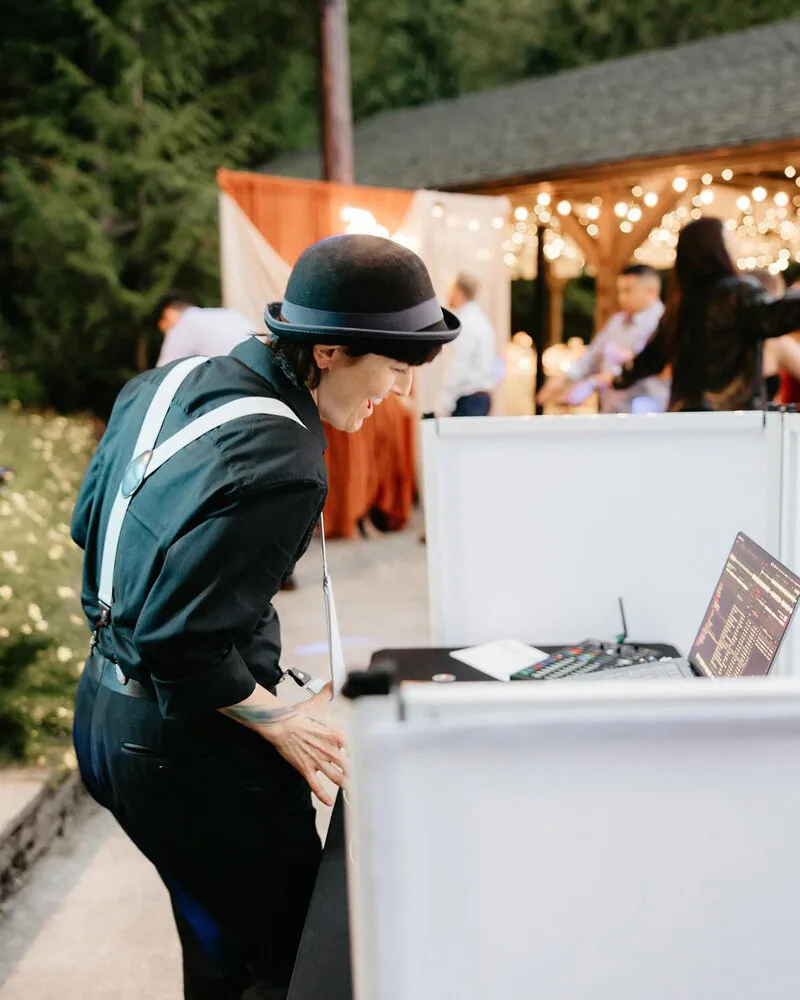
After coordinating hundreds of Pacific Northwest weddings, DJ Kelli plans these two roles as a team from the start. The DJ sets the audio and the moment. The bilingual MC delivers the words. Then the DJ brings the music back up on cue. Picture the grand entrance. The DJ starts the entrance track and sets the volume. The bilingual MC announces the couple, first in one language, then the other. The DJ holds the music under the announcement, then lifts it as the couple reaches the floor. That single moment involves two people, three cues, and one shared plan. That handoff, repeated cleanly all night, keeps a bilingual Chinese wedding reception smooth. You can see how this fits our wider DJ support for Chinese and multicultural weddings.
Building one shared timeline for a bilingual reception
Everything above depends on a single shared timeline. The couple, the DJ, the bilingual MC, the planner, and the caterer all work from the same document. That way, no one is guessing when the toasts begin or who speaks first. A shared timeline also protects against last-minute changes. When a course runs late or a speaker arrives early, everyone adjusts from the same page.
This post does not cover reception order or run times. That belongs elsewhere. For the full sequence, see our Chinese wedding reception timeline guide. Here, the focus is language. So mark on the timeline which moments are bilingual and which are single language. Note who holds the microphone at each one.
Microphone, music, and translation handoffs
This is where online timelines and real life drift apart. On paper, a bilingual announcement looks like one line. In the room, it takes noticeably longer.
Translated announcements and microphone handoffs eat more time than a written timeline suggests. Even a short transition needs a clear cue and an agreed order. Who speaks first? When does the music fade, and when does it return? These small decisions prevent awkward gaps.
So build a little buffer around every bilingual moment. A few extra seconds per handoff adds up over an evening. Planning for it keeps the pacing calm rather than rushed.
Preparing a friend or relative to MC
A friend or relative can make an excellent bilingual MC. Still, this role needs more preparation than most people expect.
From coordinating events across Seattle and Snohomish, DJ Kelli notices the same pattern often. Family MCs are warm and genuine, yet unclear handoffs create pauses. The fix is simple. Give them a written run of show, the exact order of speakers, and short, concise announcements to deliver. Include name pronunciations and any titles in advance. Confirm the microphone and sound setup as part of the same rehearsal.
Names deserve extra care. A mispronounced name in front of the whole room is a small mistake with a large sting. So write out pronunciations phonetically, and review them together beforehand. A quick rehearsal helps too. When a first-time MC knows the sequence and has practiced the cues, the whole room feels the difference. Concise announcements and a shared run of show almost always beat improvising in the moment.
A bilingual Chinese wedding reception checklist
Before the day arrives, confirm these basics. First, decide which announcements need both languages. Second, choose your bilingual MC. Third, separate the DJ and MC responsibilities clearly. Fourth, build one shared timeline and cue sheet. Fifth, plan the microphone and music handoffs. Sixth, document names, titles, and pronunciations. Finally, rehearse with anyone new to the microphone.
These seven steps make a bilingual Chinese wedding reception feel organized rather than improvised. Music also carries cultural weight across generations, so plan it with the same care. Our Chinese and multicultural wedding music guide walks through balancing languages and song choices. For broader cultural context, the encyclopedic overview of Chinese marriage traditions offers useful background.
With this plan in place, a bilingual Chinese wedding reception feels clear and calm. The room stays oriented from the first announcement to the last.
Chinese & Multicultural Wedding Planning
Use the planning hub for the full resource library, or continue with the page most relevant to your next decision:
Bilingual Chinese wedding reception FAQ
Do the DJ and bilingual MC do the same job?
No. The DJ controls music, sound, volume, and timing. The bilingual MC speaks to guests in both languages. They share one plan, but they hold two separate roles.
Which bilingual reception announcements need both languages?
Translate anything that affects guests directly. The grand entrance, the welcome, key toasts, and dinner cues all qualify. Quick internal notes can stay in one language.
Can a family member serve as the bilingual MC?
Yes. A confident friend or relative works well. Still, give them a written run of show, name pronunciations, and a short rehearsal. Preparation makes the difference.
Why does a bilingual reception run longer than the timeline shows?
Translated announcements and microphone handoffs take real time. A written timeline hides that cost. So build a few seconds of buffer around each bilingual moment.
A bilingual Chinese wedding reception works best when both languages share one plan, one timeline, and clear cues. Many couples in Seattle host guests who speak English and guests who speak Mandarin or Cantonese. Both groups deserve to follow every announcement, toast, and transition. That coordination does not happen by accident. Instead, it comes from deciding early who speaks, in which language, and at which moment.
This guide covers the planning side. It does not teach Chinese wedding customs, and it does not claim that Puget Sounds provides a Chinese-language MC. Instead, it explains how the announcement and language logistics actually work in the room. That way, you can build a reception that reads clearly to everyone present.
Why a bilingual Chinese wedding reception needs one plan
A bilingual Chinese wedding reception carries double the spoken content. Every welcome, every introduction, and every toast can run twice. Without structure, that repetition stretches the night and confuses the pacing. With structure, it feels natural and inclusive instead.
So the goal is not to translate everything word for word. The goal is to decide what needs both languages, what needs one, and how each moment flows into the next. A short planning conversation up front prevents long pauses later. It also frees you to enjoy the evening rather than manage it. This planning lowers stress for your families too. When elders know the evening will speak their language, they relax and take part more fully.
For couples building their broader plan, our Chinese wedding planning resources cover the wider checklist. This post stays focused on the language and announcement layer.
Which bilingual reception announcements need translation
Not every line needs two languages. Some moments carry meaning for the whole room. Others are practical and short. Sorting them early keeps the reception moving.
Announcements that benefit from both languages include the grand entrance, the welcome, and key toasts. Any instruction that affects guests directly belongs here too. For example, a dinner or buffet cue matters to everyone, so both language groups should hear it. Meanwhile, quick logistical asides can often stay in one language. Consider the practical cues too. Seating instructions, a restroom location, or a shuttle time can each cause confusion if only half the room hears them. So treat guest-facing logistics as bilingual by default. Purely internal notes, such as a cue between the DJ and the caterer, do not need translation at all.
Here is a simple test. If a missed announcement would leave half the room unsure what to do next, translate it. If it would not, keep it brief. That single filter removes most of the guesswork from a bilingual Chinese wedding reception.
Who should serve as the bilingual MC
The bilingual MC is the voice that carries the room across both languages. This person introduces, explains, and keeps guests oriented. Fluency matters, but so does composure on a microphone in front of a crowd.
Some couples hire a professional bilingual MC. Others ask a confident friend or relative. Both paths work. A professional interpreter or MC brings experience with pacing and clarity. Organizations like the American Translators Association explain what professional language support involves. A family member, by contrast, brings warmth and familiarity. So the right choice depends on your guests and your comfort level.
Whoever takes the role, confirm it early. A late decision leaves no time to prepare, and preparation is what makes this role work.
How the DJ and bilingual MC divide the room
Here is the misconception worth correcting directly. Many couples assume the DJ and the bilingual MC do the same job. They do not.
The DJ controls music, sound, volume, and timing. The bilingual MC communicates with guests in both languages. These are two separate roles that share one timeline. When they are treated as one job, cues get missed and transitions stall.
After coordinating hundreds of Pacific Northwest weddings, DJ Kelli plans these two roles as a team from the start. The DJ sets the audio and the moment. The bilingual MC delivers the words. Then the DJ brings the music back up on cue. Picture the grand entrance. The DJ starts the entrance track and sets the volume. The bilingual MC announces the couple, first in one language, then the other. The DJ holds the music under the announcement, then lifts it as the couple reaches the floor. That single moment involves two people, three cues, and one shared plan. That handoff, repeated cleanly all night, keeps a bilingual Chinese wedding reception smooth. You can see how this fits our wider DJ support for Chinese and multicultural weddings.
Building one shared timeline for a bilingual reception
Everything above depends on a single shared timeline. The couple, the DJ, the bilingual MC, the planner, and the caterer all work from the same document. That way, no one is guessing when the toasts begin or who speaks first. A shared timeline also protects against last-minute changes. When a course runs late or a speaker arrives early, everyone adjusts from the same page.
This post does not cover reception order or run times. That belongs elsewhere. For the full sequence, see our Chinese wedding reception timeline guide. Here, the focus is language. So mark on the timeline which moments are bilingual and which are single language. Note who holds the microphone at each one.
Microphone, music, and translation handoffs
This is where online timelines and real life drift apart. On paper, a bilingual announcement looks like one line. In the room, it takes noticeably longer.
Translated announcements and microphone handoffs eat more time than a written timeline suggests. Even a short transition needs a clear cue and an agreed order. Who speaks first? When does the music fade, and when does it return? These small decisions prevent awkward gaps.
So build a little buffer around every bilingual moment. A few extra seconds per handoff adds up over an evening. Planning for it keeps the pacing calm rather than rushed.
Preparing a friend or relative to MC
A friend or relative can make an excellent bilingual MC. Still, this role needs more preparation than most people expect.
From coordinating events across Seattle and Snohomish, DJ Kelli notices the same pattern often. Family MCs are warm and genuine, yet unclear handoffs create pauses. The fix is simple. Give them a written run of show, the exact order of speakers, and short, concise announcements to deliver. Include name pronunciations and any titles in advance. Confirm the microphone and sound setup as part of the same rehearsal.
Names deserve extra care. A mispronounced name in front of the whole room is a small mistake with a large sting. So write out pronunciations phonetically, and review them together beforehand. A quick rehearsal helps too. When a first-time MC knows the sequence and has practiced the cues, the whole room feels the difference. Concise announcements and a shared run of show almost always beat improvising in the moment.
A bilingual Chinese wedding reception checklist
Before the day arrives, confirm these basics. First, decide which announcements need both languages. Second, choose your bilingual MC. Third, separate the DJ and MC responsibilities clearly. Fourth, build one shared timeline and cue sheet. Fifth, plan the microphone and music handoffs. Sixth, document names, titles, and pronunciations. Finally, rehearse with anyone new to the microphone.
These seven steps make a bilingual Chinese wedding reception feel organized rather than improvised. Music also carries cultural weight across generations, so plan it with the same care. Our Chinese and multicultural wedding music guide walks through balancing languages and song choices. For broader cultural context, the encyclopedic overview of Chinese marriage traditions offers useful background.
With this plan in place, a bilingual Chinese wedding reception feels clear and calm. The room stays oriented from the first announcement to the last.
Chinese & Multicultural Wedding Planning
Use the planning hub for the full resource library, or continue with the page most relevant to your next decision:
Bilingual Chinese wedding reception FAQ
Do the DJ and bilingual MC do the same job?
No. The DJ controls music, sound, volume, and timing. The bilingual MC speaks to guests in both languages. They share one plan, but they hold two separate roles.
Which bilingual reception announcements need both languages?
Translate anything that affects guests directly. The grand entrance, the welcome, key toasts, and dinner cues all qualify. Quick internal notes can stay in one language.
Can a family member serve as the bilingual MC?
Yes. A confident friend or relative works well. Still, give them a written run of show, name pronunciations, and a short rehearsal. Preparation makes the difference.
Why does a bilingual reception run longer than the timeline shows?
Translated announcements and microphone handoffs take real time. A written timeline hides that cost. So build a few seconds of buffer around each bilingual moment.