When your wedding timeline is running late, it rarely means the night is ruined. In most cases, experienced vendors absorb the delay quietly and guests never notice anything changed.
A lot of couples spend significant energy trying to protect every minute of their schedule. That makes sense. But the fear that a 20-minute delay will unravel the whole night does not usually match what actually happens.
How Common a Running-Late Wedding Timeline Actually Is
Most receptions run behind at some point. Guests arrive late to the ceremony. Family photos take longer than anticipated. Cocktail hour bleeds into dinner. A vendor needs a few more minutes to reset a room.
These things happen at weddings across Seattle, Snohomish, Woodinville, and pretty much everywhere else in the Pacific Northwest. Experienced vendors are not surprised by them. They plan for them.
A good planner will often build buffer time into the schedule precisely because something will slip. When dinner starts late, that buffer is what makes it possible to finish the evening without cutting something meaningful.
What Vendors Do When a Wedding Timeline Runs Late
Most of the adjustment work that happens when a timeline falls behind is invisible to guests. That is not an accident.
Photographers adjust shot sequences. Caterers hold courses or stagger service. Coordinators quietly shift the order of events to recover time without making announcements about it.
The most stressful moments for couples are often completely invisible to their guests. What looks like a smooth, well-paced evening from the guest side is sometimes the result of several vendors problem-solving in the background.
The DJ’s Role When the Wedding Timeline Is Running Late
When dinner starts late, the DJ is usually one of the first vendors to notice and one of the first to start working around it.
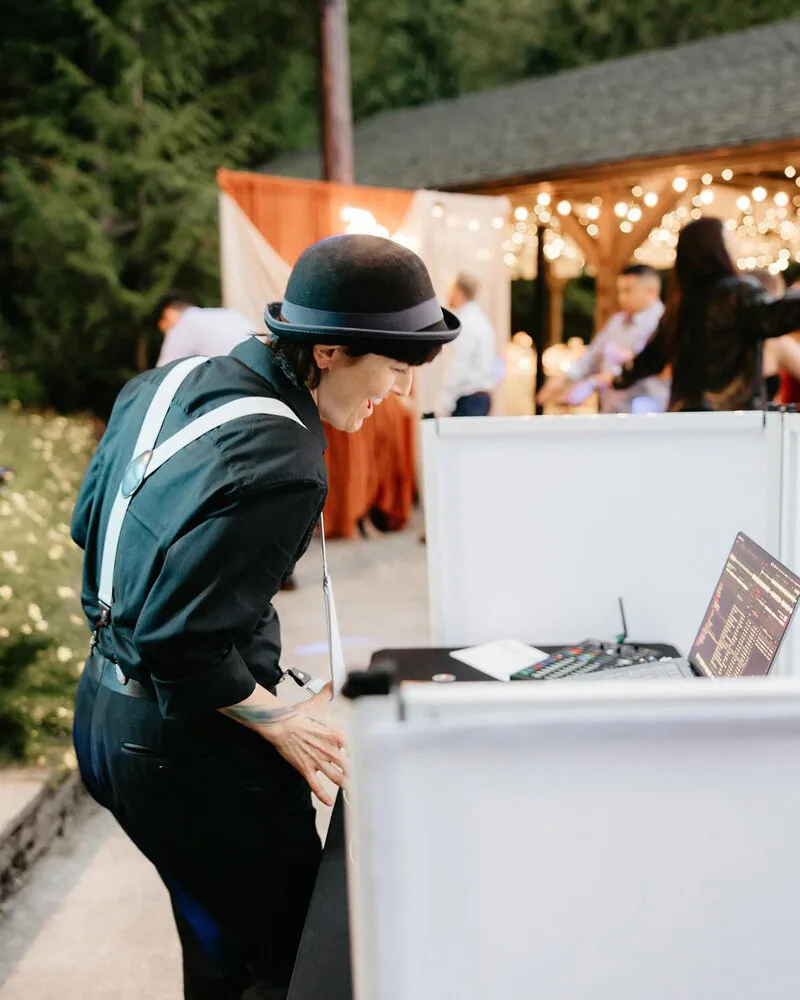
DJ Kelli monitors the timeline throughout the entire event. When something falls behind, the next step is not waiting to see what happens. It is checking in with the caterer about their estimated timing, talking to the photographer about where they are, and starting to figure out where time can be recovered.
One of the most effective adjustments is reordering formalities. If dinner is starting significantly late, for example, moving the signature dances to before dinner rather than after can recover meaningful time without shortening anything. Guests often do not notice the sequence changed. They just experience the evening as it unfolds.
This kind of flexibility requires knowing the timeline well enough to identify what is moveable and what is not, and communicating those options to the couple or coordinator quickly and calmly.
What Clients Notice Versus What They Don’t
Couples tend to feel every minute of a delay. Guests usually do not.
If cocktail hour runs long, guests are typically still socializing, finishing drinks, and talking to people they have not seen in years. A 15-minute extension does not register as a problem. It often just means more time with people they are glad to see.
If dinner starts late and speeches push back dancing by half an hour, guests who were not watching the clock rarely notice. What they notice is whether the evening felt connected and whether the transitions felt smooth.
The gap between what couples experience as a timeline issue and what guests experience as a normal, enjoyable evening is usually much larger than expected.
How Vendor Communication Changes When Things Shift
When a timeline slips, communication between vendors becomes more active, not less.
The coordinator is usually the hub. DJs, photographers, and caterers are all checking in, sharing updated estimates, and adjusting their sequencing in response. In most cases, this happens quietly, away from the couple and guests.
The couple does not need to be the one managing this. If vendors are experienced and communicating well, the couple usually finds out about a delay only if it affects a decision that is theirs to make, like whether to shorten a slideshow or combine two announced moments into one.
When to communicate with couples versus when to just adapt is a judgment call that comes from knowing which adjustments require input and which ones do not. Most small recoveries fall into the second category.
The Timeline Rarely Ends Where It Started
By the time most receptions reach open dancing, the timeline has usually shifted in several small ways. Some things ran long. Other things were tightened. A few things were reordered.
What couples often realize afterward is that none of it mattered in the way they feared it would. The evening felt complete. Guests danced. The important moments happened.
Protecting the feeling of the night matters more than protecting every line on a printed schedule. Experienced vendors know this, and most of the work they do when timelines shift is in service of exactly that.
Frequently Asked Questions
What happens if my wedding dinner runs an hour late?
Most experienced vendors will begin adjusting quietly. The DJ may reorder formalities — moving signature dances to before dinner, for example — the caterer may stagger service, and the coordinator will communicate updates between vendors. Guests typically do not notice small delays.
Should I build buffer time into my wedding timeline?
Yes. A good planner will include buffer time in the schedule specifically because something will run long. That extra time is not wasted. It is what makes recovery possible when dinner or photos take longer than expected.
Will the DJ tell me if we are running behind?
If a delay requires a decision from you, yes. If it is something vendors can absorb on their own, you may not hear about it until after the event — or not at all. Most small recoveries happen without involving the couple directly.
What is the most common thing couples worry about that guests don’t notice?
Timeline delays. Guests are usually socializing, eating, and enjoying themselves. A 20-minute shift in dinner timing rarely registers for anyone not watching the clock.
How late can we change our wedding timeline?
Send planned timeline changes to Puget Sounds at least one week before the event whenever possible. Event-day changes still happen and can usually be handled in real time. If a change requires DJ Kelli to play beyond the contracted end time, the couple must approve the additional coverage.
When your wedding timeline is running late, it rarely means the night is ruined. In most cases, experienced vendors absorb the delay quietly and guests never notice anything changed.
A lot of couples spend significant energy trying to protect every minute of their schedule. That makes sense. But the fear that a 20-minute delay will unravel the whole night does not usually match what actually happens.
How Common a Running-Late Wedding Timeline Actually Is
Most receptions run behind at some point. Guests arrive late to the ceremony. Family photos take longer than anticipated. Cocktail hour bleeds into dinner. A vendor needs a few more minutes to reset a room.
These things happen at weddings across Seattle, Snohomish, Woodinville, and pretty much everywhere else in the Pacific Northwest. Experienced vendors are not surprised by them. They plan for them.
A good planner will often build buffer time into the schedule precisely because something will slip. When dinner starts late, that buffer is what makes it possible to finish the evening without cutting something meaningful.
What Vendors Do When a Wedding Timeline Runs Late
Most of the adjustment work that happens when a timeline falls behind is invisible to guests. That is not an accident.
Photographers adjust shot sequences. Caterers hold courses or stagger service. Coordinators quietly shift the order of events to recover time without making announcements about it.
The most stressful moments for couples are often completely invisible to their guests. What looks like a smooth, well-paced evening from the guest side is sometimes the result of several vendors problem-solving in the background.
The DJ’s Role When the Wedding Timeline Is Running Late
When dinner starts late, the DJ is usually one of the first vendors to notice and one of the first to start working around it.
DJ Kelli monitors the timeline throughout the entire event. When something falls behind, the next step is not waiting to see what happens. It is checking in with the caterer about their estimated timing, talking to the photographer about where they are, and starting to figure out where time can be recovered.
One of the most effective adjustments is reordering formalities. If dinner is starting significantly late, for example, moving the signature dances to before dinner rather than after can recover meaningful time without shortening anything. Guests often do not notice the sequence changed. They just experience the evening as it unfolds.
This kind of flexibility requires knowing the timeline well enough to identify what is moveable and what is not, and communicating those options to the couple or coordinator quickly and calmly.
What Clients Notice Versus What They Don’t
Couples tend to feel every minute of a delay. Guests usually do not.
If cocktail hour runs long, guests are typically still socializing, finishing drinks, and talking to people they have not seen in years. A 15-minute extension does not register as a problem. It often just means more time with people they are glad to see.
If dinner starts late and speeches push back dancing by half an hour, guests who were not watching the clock rarely notice. What they notice is whether the evening felt connected and whether the transitions felt smooth.
The gap between what couples experience as a timeline issue and what guests experience as a normal, enjoyable evening is usually much larger than expected.
How Vendor Communication Changes When Things Shift
When a timeline slips, communication between vendors becomes more active, not less.
The coordinator is usually the hub. DJs, photographers, and caterers are all checking in, sharing updated estimates, and adjusting their sequencing in response. In most cases, this happens quietly, away from the couple and guests.
The couple does not need to be the one managing this. If vendors are experienced and communicating well, the couple usually finds out about a delay only if it affects a decision that is theirs to make, like whether to shorten a slideshow or combine two announced moments into one.
When to communicate with couples versus when to just adapt is a judgment call that comes from knowing which adjustments require input and which ones do not. Most small recoveries fall into the second category.
The Timeline Rarely Ends Where It Started
By the time most receptions reach open dancing, the timeline has usually shifted in several small ways. Some things ran long. Other things were tightened. A few things were reordered.
What couples often realize afterward is that none of it mattered in the way they feared it would. The evening felt complete. Guests danced. The important moments happened.
Protecting the feeling of the night matters more than protecting every line on a printed schedule. Experienced vendors know this, and most of the work they do when timelines shift is in service of exactly that.
Frequently Asked Questions
What happens if my wedding dinner runs an hour late?
Most experienced vendors will begin adjusting quietly. The DJ may reorder formalities — moving signature dances to before dinner, for example — the caterer may stagger service, and the coordinator will communicate updates between vendors. Guests typically do not notice small delays.
Should I build buffer time into my wedding timeline?
Yes. A good planner will include buffer time in the schedule specifically because something will run long. That extra time is not wasted. It is what makes recovery possible when dinner or photos take longer than expected.
Will the DJ tell me if we are running behind?
If a delay requires a decision from you, yes. If it is something vendors can absorb on their own, you may not hear about it until after the event — or not at all. Most small recoveries happen without involving the couple directly.
What is the most common thing couples worry about that guests don’t notice?
Timeline delays. Guests are usually socializing, eating, and enjoying themselves. A 20-minute shift in dinner timing rarely registers for anyone not watching the clock.
How late can we change our wedding timeline?
Send planned timeline changes to Puget Sounds at least one week before the event whenever possible. Event-day changes still happen and can usually be handled in real time. If a change requires DJ Kelli to play beyond the contracted end time, the couple must approve the additional coverage.